Cost is the easy question — the expensive stack runs ~108× more money. The real question for adopting MiniMax-H3 is effort: what work moves onto you when you drop the autonomous multi-model pipeline for one self-hosted image-to-video model? Each experiment below rebuilds a real production beat and scores the difficulty, axis by axis.
Aggregated across the experiments so far. The scorecard is the shared rubric every experiment fills in; the number moves as more beats are tested.
The honest answer: MiniMax-H3 is meaningfully harder to operate than the expensive stack — but almost all of the extra difficulty is one-time and structural, not recurring. Three things drive it: labels move to a separate overlay stage, motion must be faked in post, and you run your own GPU. What you don't lose is the look — i2v conditioning on the existing keyframes reproduces it. So the trade is real work and lower autonomy in exchange for a ~108× cost cut. Once the playbook, prompt templates and a warm GPU image exist, the per-video gap narrows to prompt-writing plus label authoring.
| Dimension | Expensive stack | MiniMax-H3 | Δ | What the difference is |
|---|---|---|---|---|
| Prompt authoring | Expensive stack | MiniMax-H3 | +2 | Expensive stack assembles a structured contract across LLM stages automatically. H3 wants one hand-written paragraph per scene — you must know the style→subject→hold→no-text scaffold. |
| First-frame consistency | Expensive stack | MiniMax-H3 | 0 | Original locks identity with an asset-bible master PNG + sha, passed to reference-to-video. H3 conditions on the same keyframe — equally easy when keyframes already exist. |
| Iterating to an acceptable take | Expensive stack | MiniMax-H3 | +3 | Original auto-retries in the cloud (hands-off, but you pay per attempt — 144 here). H3 iteration is manual and you must diagnose failure modes (turbo bubbles, drift, clip length) — heavy the first time, light once learned. |
| On-screen text & labels | Expensive stack | MiniMax-H3 | +3 | Original requests labels via a native_labels field and the model/label stage renders them. H3 garbles any text, so labels move to a separate HyperFrames overlay stage you author by hand — the single biggest added burden. |
| Motion & camera | Expensive stack | MiniMax-H3 | +2 | Original takes rich camera language directly. H3 must be told to hold still, then motion is faked with hold-to-slot / Ken-Burns in post — extra editing and a lower motion ceiling. |
| Audio | Expensive stack | MiniMax-H3 | 0 | Original runs a dedicated TTS/music stage. H3 bakes a soft ambient bed you high-pass and mix under reused VO — comparable effort, different shape. |
| Infra & ops | Expensive stack | MiniMax-H3 | +3 | Original is pure API calls — a key and a budget. H3 means standing up a GPU box, ComfyUI, ~60 GB of weights and a driver script before a single frame renders. |
| Autonomy (idea → video) | Expensive stack | MiniMax-H3 | +2 | Original goes from a topic to a finished video unattended. H3 needs keyframes and narration to already exist and a human in the loop tuning each beat. |
Dots = human/ops friction (1 trivial → 5 heavy). Δ is how much harder H3 is on that axis (red = harder). Cost runs the opposite direction: the expensive stack is ~108× more money for less hands-on work.
One completed, three planned — chosen to probe where the effort gap is widest (labels, motion) and where it should nearly vanish (non-hero B-roll, from-zero).


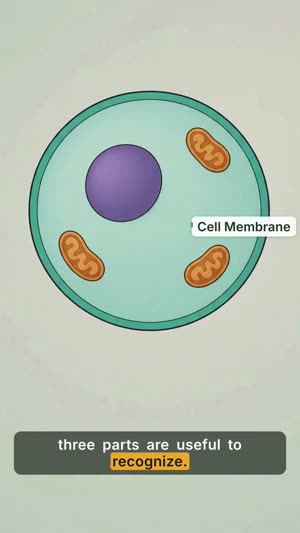
Flat-vector Grade-7 biology explainer with a recurring hero cell. 17 beats reproduced by i2v on the original keyframes; labels moved to HyperFrames.
The original lever's target: swap Seedance for H3 on incidental B-roll where identity lock doesn't matter. Expect the effort gap to shrink — no labels, motion welcome.
Can H3 i2v stand in for HeyGen on a presenter hook? Tests the one beat where the original stack was already cheap ($1.76) — the interesting question is quality, not cost.
Remove the biggest H3 advantage: start from just a topic. Measures the true floor — one image model for keyframes + TTS + H3 — against the full autonomous run.
Every experiment rebuilds a real beat (or whole video) three ways to hold the output constant: same keyframes, same narration, same timeline. We then record, per beat, the exact machinery each side ran — models, retries, entity locks, QC gates for the original; workflow, steps, seed, prompt for H3 — and score eight axes of human/ops friction from 1 (trivial) to 5 (heavy). Cost comes from the pipeline's own billed ledger, not estimates.
“Harder” is deliberately about effort, not quality or price — those are reported separately so a reader can weigh all three.